
What Hertfordshire teams gain from joined-up review
Longer working edge life
Grade and geometry choices are tied back to the material and the real cutting load.
Better use of stock data
Consumption patterns can highlight applications that need attention before waste grows.
Lower avoidable spend
Cutting performance and inventory control together support more sensible purchasing.
Improve cutting performance and stock control
For manufacturers in Hertfordshire, short tool life does not just raise tooling spend. It also distorts stockholding, increases urgent reordering and hides process weaknesses behind constant replacement. We focus here on solid carbide tooling, indexable milling and turning tools, and inventory-control consultancy so cutting performance and stock behaviour can be reviewed together. With Smart Tools (UK) Ltd, the aim is to see where wear is being driven by the application and where stock data is trying to tell you the same story.
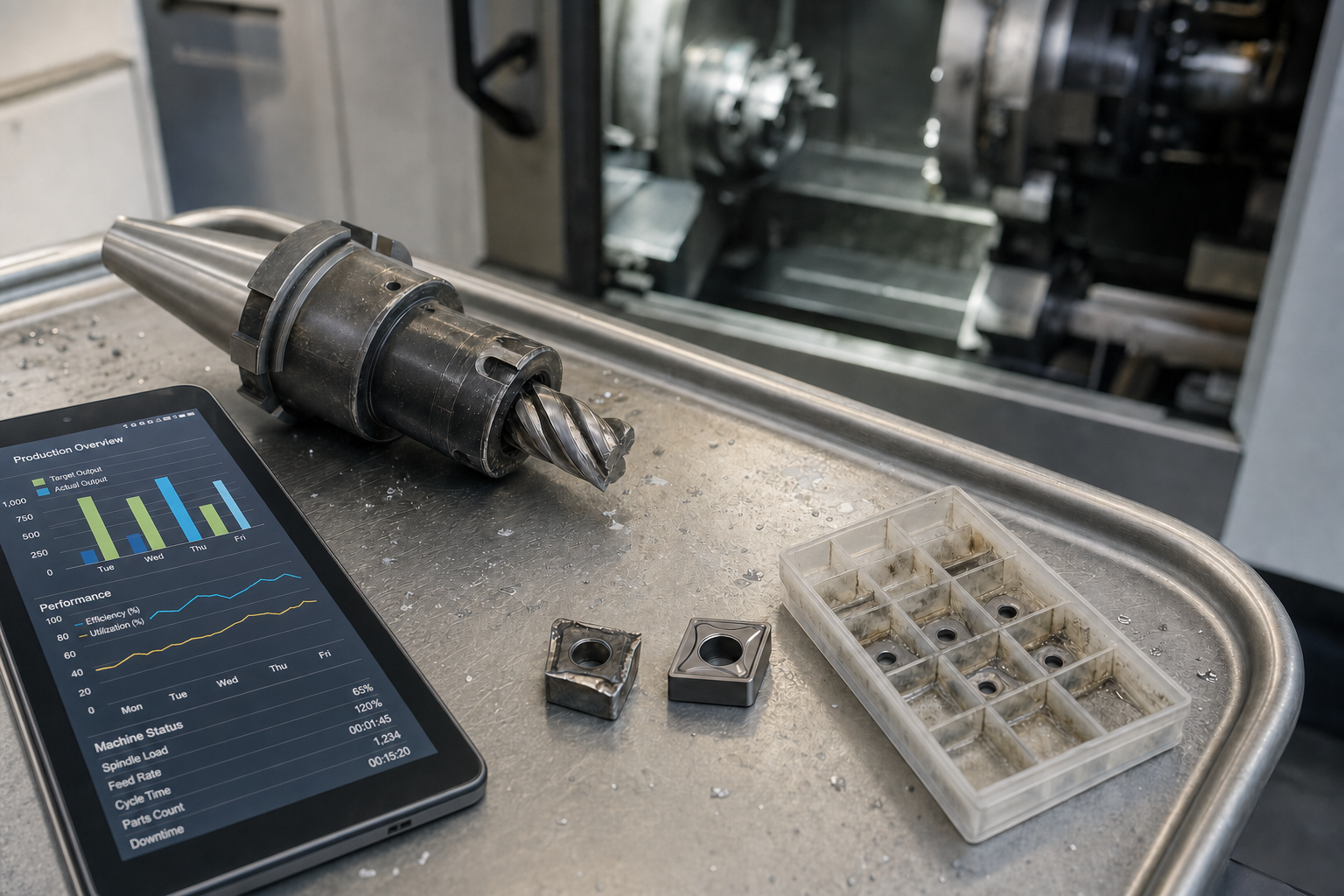

Let wear patterns guide your next tooling choice
A published stainless-steel machining project achieved 2.75 times longer tool life, which shows how much the right grade, geometry and cutting conditions can matter. If Hertfordshire production teams are seeing repeated insert use, unstable carbide life or unusual consumption in stores, we can look at both the machining setup and the usage pattern. Through Smart Tools (UK) Ltd, that creates a more joined-up route to lower waste, steadier supply and a process that behaves more predictably.
Frequently asked questions
Why review tooling and inventory together?
Because repeated consumption often points to a machining issue rather than simple stock movement. In Hertfordshire production work, short tool life, unstable inserts or overuse of one tool line can reveal where an application needs technical attention before purchasing controls alone can fix it.
Can you help with both carbide and indexable tooling?
Yes. We can review solid carbide and indexable routes according to the operation, material and production aim. That matters because one job may benefit from carbide rigidity while another is better served by insert flexibility and clearer edge-cost control.
What should we include in a Hertfordshire enquiry?
Send the material, machine, operation, current tool type and what is going wrong. If unusual stock usage is part of the issue, include that as well. The combination helps us judge whether the main gain is likely to come from the tooling choice, the cutting method or inventory changes.